The Halfway Haunting: What It Means When a Book Holds You Hostage for Months
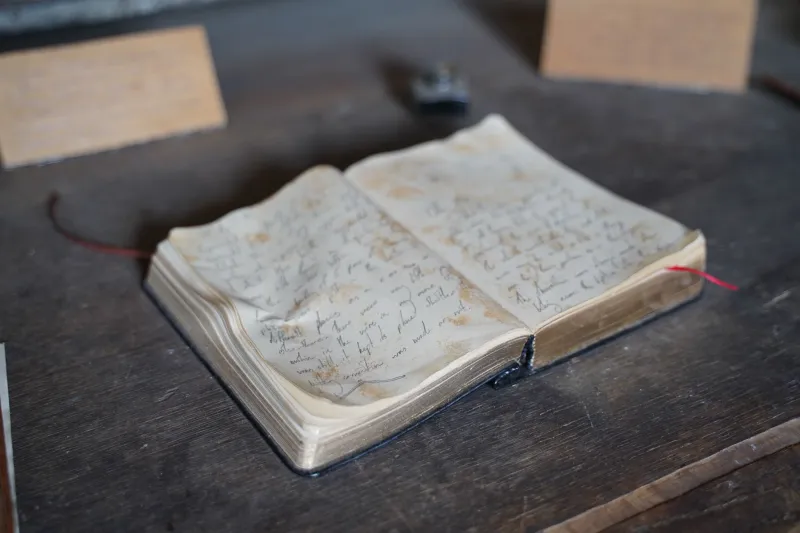
It's on your nightstand right now, isn't it? Or maybe it migrated to the coffee table, or got tucked into your bag with optimistic intentions and has been living there ever since. The bookmark is still in place — you know exactly what page you're on — but you haven't actually opened it in weeks. Maybe months. Possibly longer than you'd like to admit.
You're not done with it. You're just... not reading it.
This is the bookmark freeze, and it's one of the stranger phenomena in a reader's life. It's not the clean break of a DNF. It's not the forward momentum of an active read. It's something in between — a story that has technically claimed you without actually holding your attention. A book that exists in a permanent state of almost.
What causes this? And more importantly, what do you do about it?
The Many Flavors of Getting Stuck
Not all mid-book freezes are created equal. The circumstances that land a reader in this particular limbo vary pretty widely, and understanding which kind you're dealing with actually matters.
The Pacing Trap. Some books earn your full devotion for the first hundred pages and then hit a structural wall — a subplot that goes nowhere, a middle section that loses the thread, a tonal shift that doesn't quite land. You're still interested in the story, in theory. But every time you pick the book up, you find yourself reading the same paragraph three times without absorbing it. The book isn't bad. It's just currently not pulling its weight.
The Life Interruption. This one is almost painfully common. You're deeply into a novel, genuinely invested, and then something happens — a move, a new job, a health thing, a relationship upheaval, a global crisis (we've all been there). You put the book down with every intention of returning, and when the dust finally settles, you've lost the thread. You can't remember who half the characters are. You'd have to start over, and that feels like too much, so you just... don't.
The Emotional Ambush. This is the sneakiest one. A book goes somewhere you weren't prepared for — a death that hits too close to home, a narrative that mirrors something you're actively living through, a theme that surfaces feelings you're not ready to sit with. You put it down not because you dislike it, but because it's doing its job too well. The book is working on you, and that's exactly the problem.
The Prestige Paralysis. Sometimes the freeze has nothing to do with the book itself and everything to do with what the book represents. It's a classic, or a prize-winner, or something you feel you should be reading carefully and thoughtfully. The pressure to do it justice makes you treat every reading session as a commitment you're not sure you can honor. So you keep postponing until you're in the "right" headspace, which somehow never fully arrives.
What the Frozen Book Is Trying to Tell You
Here's a slightly uncomfortable truth: a book you've been "currently reading" for six months is communicating something, and it's worth listening to.
Sometimes it's saying the timing is wrong. Books are not emotionally neutral objects — they require something from us, and what they require changes depending on where we are in our lives. A book about grief is a different experience when you're actively grieving versus when you're not. A novel about ambition reads differently during a career crisis than it does in a period of contentment. The frozen book might simply be waiting for a version of you that's more ready to receive it.
Other times, the freeze is an honest signal that this particular book and this particular reader are just not compatible. And that's fine. Not every story is meant for every person at every point in their reading life. The frozen book might be an excellent novel that is simply not your excellent novel.
The tricky part is telling the difference between those two things.
The Case for Going Back
There's a real argument for returning to the frozen book, especially if the freeze was circumstantial rather than structural. Life interruptions are real, and they don't necessarily mean the story has lost its grip on you — only that the grip was temporarily loosened.
A few strategies that actually help: Go back further than you think you need to. If you stopped at page 180, start rereading from page 150, or even earlier. Let the story reorient you slowly. Don't try to pick up at full speed.
Also: give yourself a fresh start on purpose. Put the book down somewhere new. Read it at a different time of day than you used to. Sometimes the physical and temporal associations we've built up around a stalled read are part of what's keeping us stuck.
And if you genuinely cannot remember enough of the plot to continue? Start over entirely. Yes, from page one. Some books actually reveal more on a second pass through the early chapters — you notice things you missed, foreshadowing clicks into place, characters feel more familiar. A full restart isn't a punishment. It might be exactly what the book needed from you.
The Case for Letting Go
But let's also be honest about the other possibility: some books are genuinely meant to stay unfinished. Not because they're bad, not because you failed them, but because the story served whatever purpose it was going to serve and then stopped being necessary.
There's something almost poetic about that, if you let yourself see it that way. You carry the first half of a novel as a kind of open question — a story that never resolved, a set of characters whose fate you'll never know. That incompleteness becomes part of your reading history in its own way. It's not nothing. It's just not a finished book.
The frozen bookmark is its own kind of record. It marks a moment in time — who you were when you started, what you were going through, why the story couldn't quite hold you. That's worth acknowledging before you either return or finally, definitively, let it go.
Either way, make the choice on purpose. The worst thing you can do is keep the book on the nightstand indefinitely, neither finishing it nor releasing it, just letting it silently judge you every time you walk by.
That, if nothing else, is not a story worth telling.