Confess It: You Never Actually Finished That Book You Keep Recommending
Let's just go ahead and say it out loud: a startling number of people who claim to have read Infinite Jest have not, in fact, read Infinite Jest. Or Moby-Dick. Or that 600-page literary novel everyone was raving about last fall that you purchased, cracked open, read 80 pages of, and then quietly slid under your bed like a small, shameful secret.
You're not alone. Not even a little bit.
There's a whole ecosystem of performative reading happening out there — in book clubs, on social media, in casual conversation at work when someone mentions they loved a book and you find yourself nodding along like you absorbed every last chapter. We lie about finishing books constantly, and we've somehow collectively agreed to pretend we don't.
So where does this come from? And why does admitting you didn't finish something feel so weirdly personal?
The Social Pressure Is Very Real
Reading has always carried a certain cultural weight in America. Finishing books — especially the "right" books — signals something. Intelligence, maybe. Patience. Taste. We've tied our identities to what we've read in a way that makes abandoning a book feel like a small admission of defeat.
There's also the group dynamic. If your book club already had the discussion about a novel you only got halfway through, catching up in real time means either confessing you bailed or quietly cobbling together opinions from the summary you skimmed at 11 p.m. the night before the meeting. Most people choose option two. And honestly? Who can blame them.
The internet has made this worse, not better. Goodreads lets you mark a book as "read" with zero accountability. BookTok and Instagram reward the appearance of being well-read just as much as actually being well-read. When a book goes viral, the pressure to have an opinion about it — a full, informed, I-finished-it opinion — can feel almost social-media-mandatory.
Why Stopping Feels Like Failing
Here's the thing about DNFs (Did Not Finish, for anyone new to the terminology): they carry this weird emotional residue that quitting other things just doesn't. If you stop watching a Netflix series halfway through, you shrug and move on. If you leave a restaurant before dessert, nobody calls it a character flaw.
But abandoning a book? That somehow feels different. There's a narrative we've internalized that says finishing a book is a sign of commitment, discipline, intellectual endurance. Stopping short implies you couldn't hack it — that the book was smarter than you, or that you were too distracted, too lazy, too something.
This is, to be clear, completely made up. But it's deeply felt.
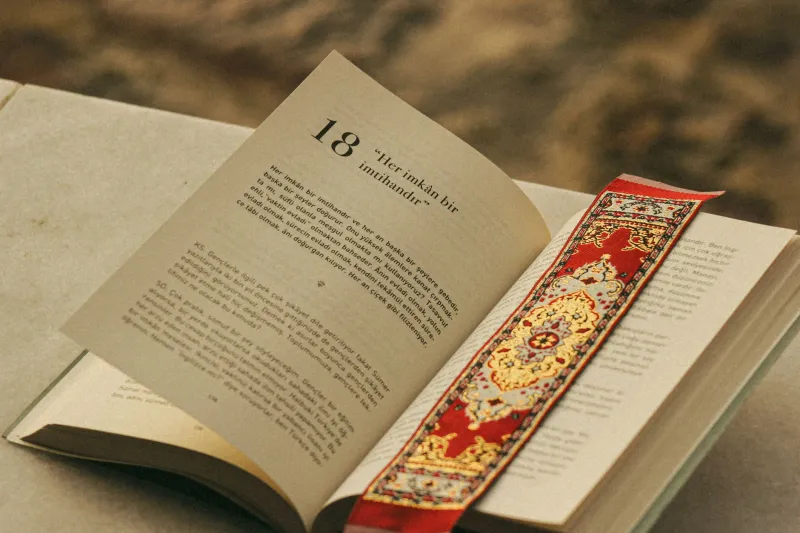
There's also the sunk cost factor. You've already spent time, money, and mental energy on this thing. Admitting you're not going to finish it means admitting all of that investment didn't pay off. So instead, you keep the bookmark stuck at page 212 indefinitely, neither finishing nor fully letting go. (We'll get into that particular purgatory in another article entirely.)
The Fib Is Usually Harmless — Until It Isn't
Most reading lies are genuinely low-stakes. Nodding along when someone mentions a book you barely started isn't going to hurt anyone. But there's a sneakier cost here that's worth examining.
When we pretend to have finished books we haven't, we participate in a culture that makes honest reading feel embarrassing. We make it harder for people to admit when something isn't working for them. We reinforce the idea that every book deserves to be finished — which, for the record, it absolutely does not.
And on a more personal level: the lie means you never get to have the real conversation. The one where you admit the pacing lost you in chapter six, or the prose was too dense for where you were mentally that month, or you just couldn't connect with the main character no matter how hard you tried. Those honest admissions are actually way more interesting than a fake five-star review.
The Readers Who Tell the Truth Are Onto Something
There's a growing contingent of readers — especially online — who are aggressively honest about their DNFs. They post them. They explain them. They don't apologize for them. And honestly? They're more fun to talk to about books than almost anyone else.
Because when you're honest about what didn't work, you're actually engaging with the reading experience in a more meaningful way. You're saying: I paid attention. I had a reaction. This particular story and I weren't compatible, and that's fine. That's not failure. That's discernment.
The readers who lie about finishing books are often the same ones who feel vaguely anxious about their reading life in general — like they're always behind, always performing, never quite measuring up to some imaginary standard. The readers who shrug and say "I put it down at page 150 and I'm not going back" tend to seem a lot more at peace.
Give Yourself Permission to Stop
Here's the reframe that might actually change how you think about all of this: not finishing a book isn't the end of your relationship with a story. Sometimes it's just a pause. Sometimes it's a permanent goodbye. Both of those outcomes are completely valid.
Life is genuinely short. The TBR pile is genuinely tall. There are so many books out there that will grab you by the collar and refuse to let go — books you'll tear through in a weekend, dog-ear obsessively, recommend to everyone you know with a kind of evangelical fervor. Those books exist. They're waiting for you.
You don't owe every book your time. And you definitely don't owe anyone a lie about how you spent it.
Next time someone asks if you finished that buzzy novel everyone was talking about, try something radical: tell the truth. Say it didn't click, or you got distracted, or you just weren't in the right headspace. See what happens. Odds are, the person you're talking to will exhale with relief and admit they didn't finish it either.
We're all in this together — halfway through more books than we'll ever admit.