Furious and Hooked: What Keeps Us Reading the Books We Actually Hate
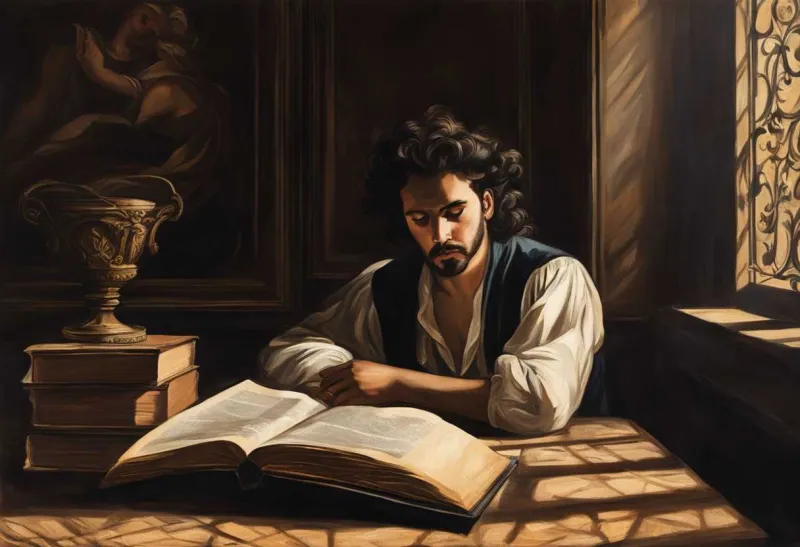
Photo: frustrated reader holding open book dramatic lighting emotional, via godsbless.ing
There's a specific kind of reader frustration that doesn't feel like boredom. It doesn't feel like confusion, and it's not the irritation of bad prose or a plot that doesn't track. It's something more active — a genuine moral heat, a sense of I cannot believe this book just did that — and yet the book remains open in your hands.
Most serious readers have been here. The question worth asking is: why?
The Difference Between Bad and Challenging
First, it's worth separating two very different experiences that can both produce reader frustration. There's the anger of a poorly constructed book — wooden characters, lazy plotting, prose that doesn't earn its ambitions. That frustration usually ends with a book going face-down on the nightstand, never to be reopened.
Then there's the other kind: the book that's technically excellent, possibly even brilliant, but that makes you deeply uncomfortable. The kind where the writing is doing exactly what it intends to do, and that's precisely the problem. That's the anger that keeps you reading.
The books in this second category are doing something that comfortable fiction can't: they're creating genuine friction between the world inside the pages and the values you've brought to the reading experience. And friction, it turns out, is one of literature's more underappreciated tools.
When the Narrator Is Someone You Can't Stand
One of the most common versions of this experience involves a narrator whose worldview is deeply at odds with the reader's own. Lolita is the obvious example — Humbert Humbert is a predator whose voice is constructed with such seductive, self-serving elegance that readers frequently report feeling manipulated by their own aesthetic responses. The prose is gorgeous. The person delivering it is monstrous. Nabokov designed that discomfort intentionally, and it does not let up.
Readers who push through that novel — and many do — often describe it as one of the most uncomfortable reading experiences of their lives and also one of the most instructive. The discomfort is the lesson. The book is asking you to notice what it feels like to be charmed by something you should resist.
A less extreme but widely reported version of this occurs with books like Gone Girl or We Need to Talk About Kevin — narratives delivered by deeply unreliable, often unsympathetic voices that readers find themselves invested in despite their better instincts. "I hated her and I needed to know what happened to her" is a sentence that could apply to any number of contemporary literary protagonists.
The Political Book You Disagree With
A different flavor of productive fury arrives when a book's ideology pushes directly against your own. This is particularly charged in American reading culture right now, where the political valence of fiction has become increasingly visible — and increasingly contested.
Conservative readers who push through The Handmaid's Tale often report a complicated experience: profound disagreement with what they perceive as its political framing alongside genuine engagement with its craft and its horror. Liberal readers who've worked through something like The Turner Diaries (frequently cited by people who study extremist rhetoric) describe a kind of nauseated compulsion — the need to understand something they find repugnant, even as the reading itself feels like a confrontation.
There's real intellectual value in both experiences, though they're not comfortable ones. The book that confirms everything you already believe is doing a certain kind of work. The book that argues back is doing something harder and often more durable.
Moral Complexity Without Resolution
Some of the angriest reader responses come not from books with objectionable ideologies but from books that refuse to deliver the moral clarity readers feel they've earned. Cormac McCarthy does this repeatedly — Blood Meridian in particular is a book that offers no redemptive arc, no authorial condemnation of its violence, no reassurance that the world it depicts is aberrant rather than essential. Readers frequently describe finishing it feeling almost cheated, as if the novel owes them something it deliberately withheld.
That withholding is the point, of course. McCarthy isn't interested in making readers feel better. He's interested in making them look at something directly. Whether readers find that valuable or simply punishing is genuinely a matter of taste — but the ones who found it punishing and kept reading anyway often report that it changed something in how they think about violence, history, and the limits of narrative redemption.
Kazuo Ishiguro's Never Let Me Go operates differently but produces a similar effect — a slow, building dread and a protagonist whose passive acceptance of her own fate can feel infuriating to readers who want her to fight back. The anger at Kathy's compliance is, for many readers, the emotional engine of the whole novel. Ishiguro is asking something uncomfortable about how humans accommodate injustice, and he's asking it through a character whose response to that injustice is deeply unsatisfying by design.
What the Anger Is Actually Telling You
Here's what's interesting about the books-that-made-us-furious phenomenon: the anger is almost always informative. It's pointing at something.
When a book makes you angry because a character's choices feel morally wrong, that's your value system activating. When a book makes you angry because its worldview challenges yours, that's your assumptions being pressure-tested. When a book makes you angry because it refuses to give you the resolution you wanted, that's your expectations about what stories are for being examined.
None of that is comfortable. All of it is useful.
Readers who actively seek out books that challenge them — who deliberately choose fiction with perspectives they don't share, or that portrays worlds they find troubling — tend to describe their reading lives as more expansive and less predictable than readers who stick close to what they know they'll enjoy. That's not a moral judgment about either approach. But it's worth noting that the books that made people furious are very rarely the ones they forget.
The Ones That Stayed
Ask a reader to name a book that genuinely disturbed or angered them, and watch what happens. They almost always remember it vividly. They can tell you where they were reading it, what it felt like to get to the part that broke them open, why they kept going. The emotional intensity of the experience burned it in.
The comfortable books — the ones that confirmed everything and disturbed nothing — are often harder to recall in the same detail. They were enjoyable. They were satisfying. They passed through.
The furious ones stayed.
Maybe that's the whole answer. Maybe the books we read through our clenched teeth are doing exactly what the best fiction is supposed to do: refusing to let us off the hook, insisting we sit with something difficult, and trusting that we're capable of handling it.
Even when we're absolutely, genuinely furious about it.