Why We Return: The Hidden Psychology Behind Reading the Same Book Twice (or Ten Times)
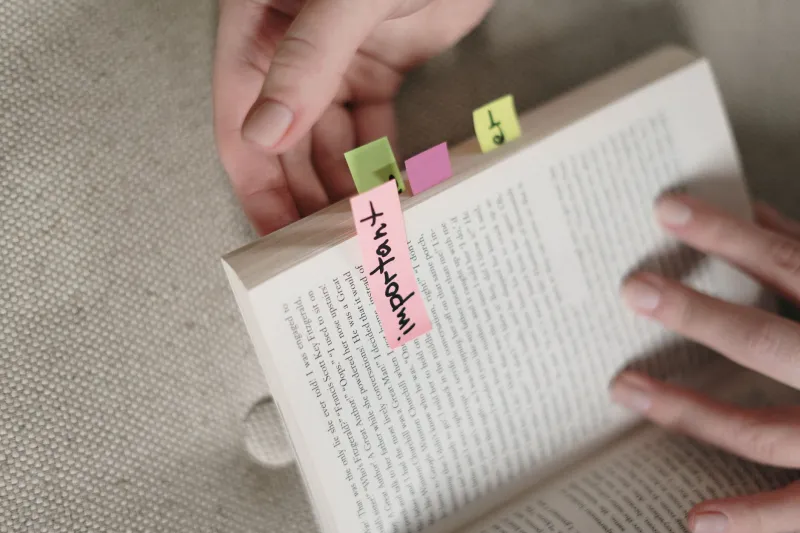
There's a particular kind of comfort in sliding a familiar book off the shelf. You already know how it ends. You know which character breaks your heart and which plot twist made you gasp the first time around. And yet — you open it anyway. You start from page one. Again.
For millions of American readers, rereading isn't a guilty habit or a sign of a too-small to-be-read pile. It's something deeper, something almost compulsive in the best possible way. And researchers who study the relationship between literature and the human mind have a lot to say about why we do it.
The Book Doesn't Change. You Do.
Here's the thing about rereading that most people sense intuitively but struggle to articulate: the words on the page are identical every time. What shifts is the reader holding the book.
Dr. Raymond Mar, a psychology professor at York University whose research focuses on narrative and cognition, has written extensively about how fiction functions as a kind of social simulation — a way for our brains to rehearse emotional and moral complexity without real-world consequences. When we return to a novel at a different life stage, we're essentially running the same simulation through upgraded hardware.
Think about reading The Catcher in the Rye at sixteen versus thirty-five. At sixteen, Holden Caulfield might feel like the only person who truly gets it. At thirty-five, you might find yourself quietly frustrated by him — and then unsettled by your own frustration. That shift isn't a betrayal of the book. It's the book doing exactly what great literature is supposed to do: holding up a mirror that shows you something new each time you look.
"I Didn't Understand Her Until I Became Her"
Reader testimonies about rereading are some of the most emotionally honest things people share in book communities. Ask almost any devoted reader about a book they've returned to repeatedly, and you'll get a story about personal transformation disguised as a reading habit.
Marcella Torres, a 42-year-old high school English teacher from Austin, Texas, has read Toni Morrison's Beloved four times since she first encountered it as a college freshman. "The first time, I was focused on the horror of it," she says. "The second time, after I had my own kids, I read it and just fell apart. Sethe became real to me in a way she hadn't before. I understood the love in her choice, even if I couldn't fully accept it. I don't think I could have accessed that reading at nineteen."
That experience — of a character suddenly snapping into focus because your own life has handed you the emotional vocabulary to understand them — is at the core of what makes rereading so powerful.
Comfort Reads and the Brain's Love of Predictability
Not every reread is about excavating new meaning. Sometimes you pick up a book because the world feels chaotic and you need something that won't surprise you in a bad way. This is the "comfort reread," and it's more psychologically sophisticated than it sounds.
Research in cognitive psychology suggests that our brains find genuine pleasure in predictability — in knowing what's coming and experiencing it anyway. There's a term for this: re-consumption enjoyment. Studies on music, film, and narrative all point to the same finding: familiarity doesn't breed contempt. For most people, it breeds a specific kind of low-stakes pleasure that reduces anxiety and activates reward pathways.
In other words, rereading your favorite novel isn't laziness. It's self-care with a literary spine.
Marginalia as Memory: Reading Your Own History
For readers who annotate — and there are passionate camps on both sides of this debate — rereading offers something uniquely strange: a conversation with your past self.
Jamison Reed, a 29-year-old graduate student in Chicago, describes picking up his college copy of Crime and Punishment last winter. "I had written 'THIS GUY' next to a passage where Raskolnikov is rationalizing his superiority. Like, I had underlined it and written 'THIS GUY' with three exclamation points. Current me has absolutely no idea what past me was thinking. But I spent twenty minutes trying to figure it out. That's not just reading. That's archaeology."
That archaeological quality of rereading — the way it layers time, forcing a dialogue between who you were and who you are — is something no first read can replicate.
The Rereading Paradox: Knowing the End Makes It Better
One of the most counterintuitive findings in reading psychology is that knowing how a story ends can actually enhance the emotional experience of reading it. A 2011 study from UC San Diego found that readers rated stories more favorably when they'd been given spoilers beforehand. The researchers theorized that freed from the cognitive effort of tracking plot outcomes, readers could engage more fully with the quality of the prose and the depth of the characters.
This is the rereader's secret advantage. When you already know that a character is going to make a devastating choice in chapter eighteen, you read chapters one through seventeen differently. You notice foreshadowing. You catch the small moments of hesitation, the tiny betrayals of self the author planted like seeds. The story becomes architectural rather than suspenseful — and that's a completely different, arguably richer, reading experience.
What Your Favorite Reread Says About You
Literary therapists — yes, that's a real specialty, and it's growing — often use a client's most-reread books as a diagnostic window. The books we return to most compulsively tend to mirror something we're still working through: an unresolved relationship dynamic, a question about identity, a grief we haven't finished processing.
That's not a reason to stop rereading. If anything, it's a reason to pay closer attention to what you're reaching for and why.
At Reedyanna Book, we believe stories stay with you because they're supposed to. The best books aren't finished when you close the cover — they keep working on you, quietly, in the background of your life. And when you pick them up again years later, you're not retreating from new experiences. You're bringing all of them back to the page.
So go ahead. Reread the one that wrecked you. You might be surprised what you find this time.