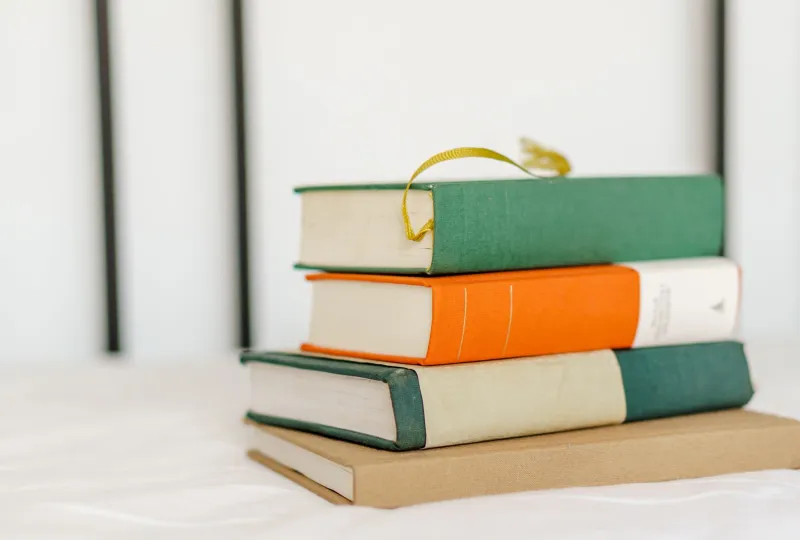
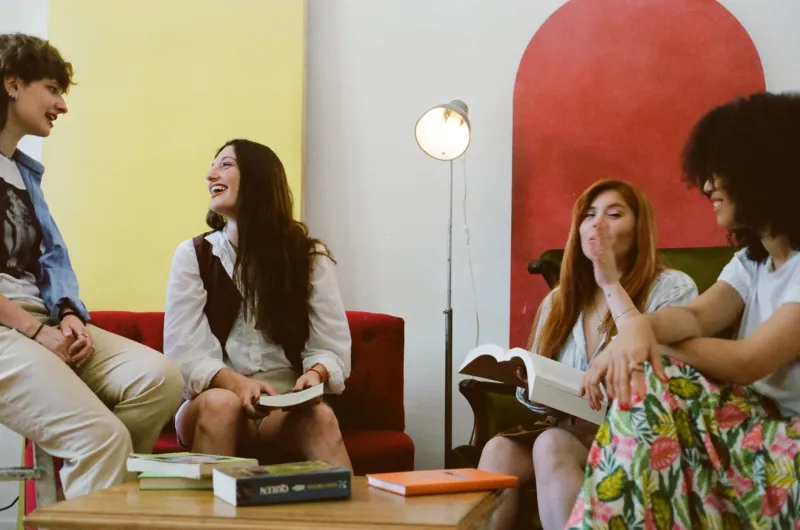
Stacked, Shelved, and Slightly Delusional: The Truth About Your TBR Pile

Let's be honest for a second. You have books on your shelf you bought in 2019 with every intention of reading "this weekend." You have a Goodreads list that scrolls for what feels like three business days. You have a Notes app full of titles someone mentioned at a dinner party, a Substack recommendation you starred and forgot, and at least one hardcover you grabbed from a Barnes & Noble sale table because the cover was just that good.
Welcome to the TBR pile. Population: all of us, drowning cheerfully.
The to-be-read list is one of reading culture's most beloved and most chaotic traditions. It's also, if we're being real, a little bit of a lie we tell ourselves. Not a mean lie — a hopeful one. The kind that keeps us going.
Why We Add Books Faster Than We Can Read Them
Here's a number that might sting: the average American reads about 12 to 17 books a year. Meanwhile, the average BookTok video drops at least three recommendations in 60 seconds. The math is simply not mathing.
So why do we keep adding?
Psychologists have a term for it: tsundoku, borrowed from Japanese, which describes the habit of acquiring books and letting them pile up unread. It sounds like a diagnosis, but it's really more of a personality trait — and a deeply human one. Buying a book is an act of intention. It says I want to be the kind of person who has read this. That feeling is real, even if the reading never happens.
There's also something called the "planning fallacy" at work. We are chronically, almost comically bad at predicting how long things will take — including reading. We look at a 400-page novel on a Sunday afternoon and think, sure, I could knock this out by Tuesday. We cannot. We will not. But the optimism is part of the ritual.
"My TBR has its own ZIP code at this point," laughed Dani, a 34-year-old teacher from Portland, Oregon, who agreed to share her reading confessions. "I added six books last week. I finished zero. But I felt great about all six additions."
That feeling — the little hit of satisfaction from adding a book — is part of what makes the pile grow. Anticipation, it turns out, is its own kind of pleasure.
The TBR as a Portrait of Who You Want to Be
Here's what nobody says out loud: your TBR pile is basically a vision board.
Look at what's on it. There's probably the literary novel you feel like you should read (hello, Pulitzer shelf). There's the self-improvement title you added during a particularly motivated January. There's the fantasy series a friend swears by, the memoir about someone whose life you find fascinating, the short story collection you keep meaning to "get into."
That pile is a map of your aspirations, your curiosity, and honestly, your identity anxieties. It says: I want to be well-read. I want to be adventurous. I want to understand the world better. Those are good things to want.
Marcus, a 41-year-old graphic designer from Atlanta, put it plainly: "I think I buy books I want to have read more than books I actually want to sit down and read right now. There's a version of me on some future couch who has read all of Cormac McCarthy. Current me keeps rewatching The Bear."
That gap — between the reader we are and the reader we imagine — is where the TBR lives. And it's not a shameful place. It's a pretty human one.
When the Pile Stops Feeling Good
Of course, there's a tipping point. For a lot of readers, the TBR stops being a source of excitement and starts feeling like a to-do list that's judging you.
You walk past the shelf and feel a little guilty. You see the unread spine of a book someone gifted you two Christmases ago. You open Goodreads and immediately close it again. The pile has gone from hopeful to oppressive, and that's when something needs to shift.
This is especially common for readers who tie their identity closely to books — people who think of themselves as readers, capital R. When the pile grows faster than the reading, it can feel like evidence of some personal failure. It isn't. But the feeling is real.
"I had to stop treating my TBR like homework," said Priya, a 29-year-old grad student from Chicago. "Once I started thinking of it as a menu instead of a syllabus, everything changed. You don't feel bad for not ordering every item at a restaurant."
That reframe — menu, not syllabus — is one of the most useful mental shifts a reader can make.
Practical Ways to Actually Make Peace With It
If you're ready to stop the guilt spiral without actually becoming a person who reads 80 books a year (no shade if you are that person), here are some approaches that actually work.
Cull with intention, not shame. Go through your physical or digital list once a year and ask: does this still sound like something I want to read, or is it something I thought I should want to read? Donate the shoulds. Keep the wants. Your TBR should feel like a party guest list, not a penance.
Stop tracking everything. Apps like Goodreads are genuinely great, but the "want to read" shelf can become its own anxiety engine. Some readers find that keeping a smaller, handwritten list of 10 to 20 titles feels more manageable — and more exciting — than a digital mountain.
Give yourself permission to not finish. A book you started and abandoned is not a debt you owe. Life is short. The pile is long. Move on.
Add with friction. Before adding a book, ask yourself: would I start this today if someone handed it to me right now? If the answer is "maybe someday," put it on a separate "someday" list and keep your active TBR short and genuinely exciting.
Read what you actually feel like reading. This sounds obvious, but a lot of readers override their instincts in favor of what they think they should read next. Mood reading — picking whatever sounds good right now — tends to produce more actual reading than sticking to a rigid list.
The Pile Is the Point
Here's the thing, though. Even if you never read every book on your list — and you won't, and that's fine — the TBR pile is still doing something valuable. It's keeping you curious. It's keeping you connected to the idea that there's always more to discover, more worlds to step into, more voices to hear.
The books you'll never get to are still, in their own weird way, part of your reading life. They're the roads not taken. The futures you imagined for yourself on a Tuesday afternoon in a bookstore.
And honestly? That's kind of beautiful.
So go ahead. Add another book. You probably won't read it by Tuesday. But maybe someday you will — and that possibility, that little flicker of what if, is exactly what keeps readers like us coming back to the shelf.