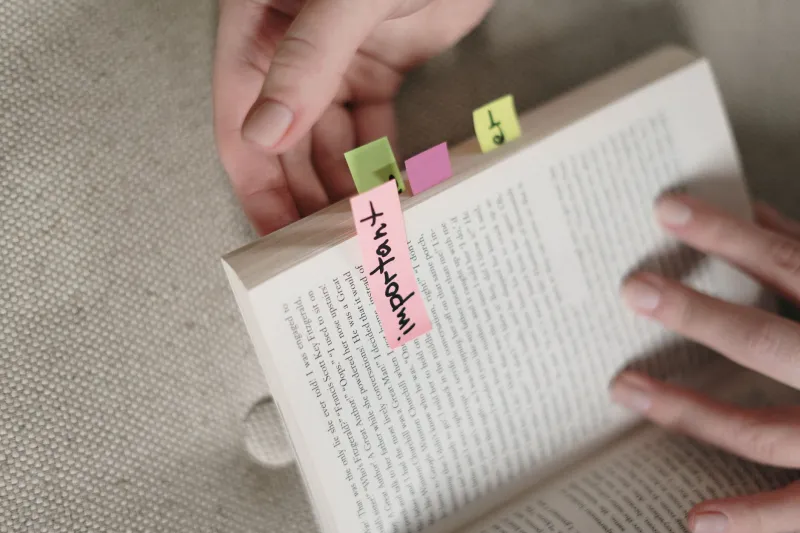
Same Pages, Different Person: What Happens When You Revisit the Book That Made You

Somewhere in a box in your parents' garage, or maybe still on the shelf above your childhood desk, there's a book with a cracked spine and maybe a few pencil marks in the margins. You probably haven't touched it in years. But you think about it — more than you'd expect. A certain phrase surfaces in your head during a hard week. A character's name pops up when you're trying to explain something about yourself to someone new.
That book did something to you. And the strange, slightly unsettling truth is: you might not fully know what until you read it again.
Rereading a formative novel as an adult isn't just a trip down memory lane. It's more like running into an old version of yourself at a party — familiar, a little awkward, and surprisingly illuminating.
The Book You Remember vs. The Book That Actually Exists
Here's the thing nobody warns you about: the book you carry in your memory is a collaboration. It's the text, yes, but it's also filtered through who you were at the time — your fears, your blind spots, the specific emotional weather of that particular season of your life.
When readers go back to a novel they adored at twelve or sixteen or twenty-two, they often describe a kind of double vision. The story feels both intimately familiar and genuinely surprising. Scenes they glossed over as kids suddenly carry enormous weight. Subplots that bored them turn out to be the emotional engine of the whole book.
Take The Catcher in the Rye. Countless American teenagers have claimed Holden Caulfield as a kindred spirit, a voice that finally gets it. But readers who return to Salinger's novel in their thirties frequently report something different — they see Holden's grief more clearly now, his mother's absence, the way his whole worldview is scaffolded around a loss he can barely name. The rebellion that felt righteous at sixteen reads, decades later, as something more fragile and heartbreaking.
The book didn't change. You did. And that gap between the two is where the real reading happens.
Why Certain Books Attach Themselves to Us
Not every book we read young sticks around in this particular way. So what makes a formative novel different from one we simply enjoyed?
Psychologists who study reading and identity development point to a concept called narrative identity — the idea that we understand ourselves through the stories we tell about our lives. Books absorbed during adolescence and early adulthood often get woven into that self-narrative at a foundational level. They arrive when we're actively constructing who we are, when we're hungry for maps of the emotional territory ahead.
A reader in her late thirties described returning to A Wrinkle in Time after her mother was diagnosed with a serious illness. She'd loved it as a girl — the adventure, the weird science, Meg's stubbornness. Reading it again, she was undone by the father. By the specific texture of missing someone who is technically still there. "I don't think I even registered that part of the story when I was nine," she said. "I just wanted Meg to win. Now I understand what she was actually fighting for."
That shift — from plot to emotional core — is one of the most common experiences adult rereaders describe. We stop reading for what happens and start reading for why it feels the way it does.
The Parts You Skipped (And What They Mean Now)
One of the more humbling aspects of rereading is confronting what you missed. Not because you were a bad reader, but because you were a young one.
Many readers who revisit To Kill a Mockingbird in adulthood find that Atticus — the heroic figure of their childhood reading — becomes a more complicated presence. The structural limitations of his heroism, the ways the novel centers white comfort even as it critiques racism, land differently for a reader who's spent years thinking critically about those dynamics. The book becomes a different kind of document: still meaningful, but more honestly situated in its moment.
This doesn't diminish the original experience. If anything, it enriches it. You get to hold both readings at once — the wonder of the first encounter and the harder, clearer view of the second.
Other readers describe the opposite experience: returning to a book they remembered as simple or slight and discovering genuine depth. A man in his forties went back to The Outsiders expecting to feel a little embarrassed by how much it had meant to him as a kid. Instead, he found himself floored by S.E. Hinton's understanding of class, loyalty, and the way boys are taught to perform toughness while quietly drowning. "It's a better book than I knew how to appreciate," he said. "She understood something I didn't have the vocabulary for yet."
When the Reread Becomes a Mirror
Sometimes returning to a formative novel isn't just intellectually interesting — it's emotionally destabilizing in ways that feel important.
Readers often time these rereads, consciously or not, around transitions: a divorce, a new city, a career change, a loss. There's something about upheaval that makes us reach for the books that once anchored us. Maybe we're looking for continuity. Maybe we're testing ourselves — checking in to see how much has changed.
A woman who reread Little Women during the first year of the pandemic described it as "accidentally therapeutic." She'd loved the March sisters as a teenager, particularly Jo's ambition and restlessness. Reading it in her early forties, recently divorced and working from a studio apartment, she found herself drawn to Marmee in a way she never had been. "I finally understood what it costs to hold a family together. What it takes to keep showing up when you're exhausted and scared. I used to think Marmee was kind of boring. Now she's the most interesting person in the book."
That's the gift of the reread — it tells you who you've become.
How to Actually Do It (Without Ruining It)
If you're thinking about revisiting a formative novel, a few thoughts from readers who've been there:
Give yourself permission to feel complicated things. You might love it more. You might love it less. You might feel both simultaneously. All of that is valid data about who you are now.
Resist the urge to protect the memory. The anxiety that a reread might "ruin" a beloved book is real, but most readers report that even difficult rereads end up adding something rather than taking it away.
Pay attention to what surprises you. The moments that catch you off guard — the passages that hit harder than expected, or the ones that fall flat — are the most interesting ones to sit with.
Don't rush it. A formative novel deserves your full attention. This isn't a speed read. Let it breathe.
The books that stay with us don't stay static. They grow alongside us, holding new meanings in reserve until we're ready to find them. Going back isn't regression — it's one of the more honest forms of self-examination available to us.
Your old book is waiting. And it has things to tell you that it couldn't say the first time around.