Two Stories at Once: The Strange Thrill of Reading a Stranger's Marginalia
Photo: Gogerr, CC BY-SA 4.0, via Wikimedia Commons
Last month at a thrift store in Ohio, I paid $3.50 for a battered copy of The Shipping News and got, as it turns out, two books for the price of one. The first is Annie Proulx's novel. The second is a running commentary from a person named only "Gary," who underlined every sentence about water, wrote "!!" beside the passage about knots, and left a single note on the final page: "Didn't want it to end."
Gary, whoever you are, I feel the same way. About the novel, yes. But also about you.
Reading as Eavesdropping
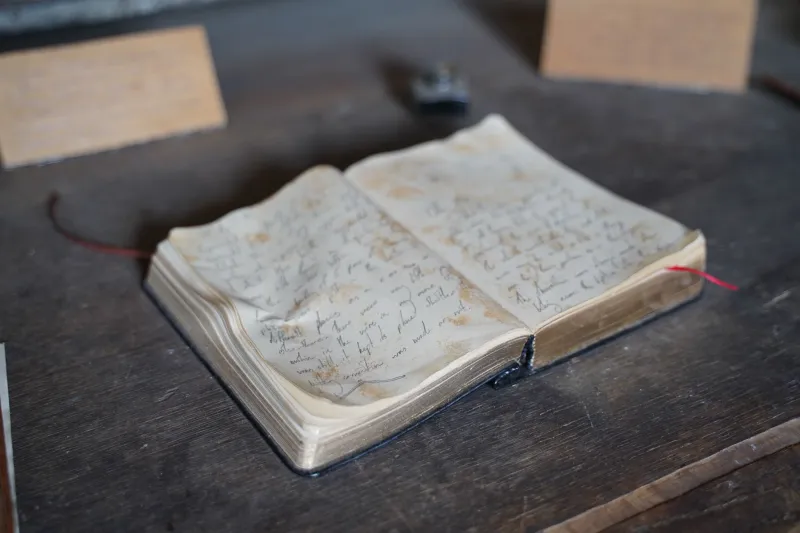
There's a particular intimacy in encountering a stranger's handwriting that no digital annotation can replicate. Handwriting is involuntary biography — the pressure of the pen, the letters that slope when the writer was tired, the way someone's "no" in the margin of a Philip Roth novel tells you more than the novel does.
When you read a marked-up used book, you're doing something close to eavesdropping. You're reading the text and the record of someone else reading it, simultaneously. Scholars call this reading against the grain; the rest of us call it snooping, and we love it.
And the artifacts! Used books are time capsules with bad spines:
- Grocery lists used as bookmarks — the one from my copy of Beloved includes "bday candles" and "call Mom," which is a poem whether it means to be or not
- Boarding passes from flights long since landed
- Inscriptions: "To Diane, Christmas 1974, all my love, R." Diane, did you keep him? The book survived, so something did
- A five-dollar bill discovered in a biography of Lincoln, which feels like a joke someone made just for you
When the Margin Improves the Novel
Here's the part that surprises people: marginalia from strangers can make a book more moving, not less.
A used copy of The Year of Magical Thinking I found in a Half Price Books in Texas had, next to the passages about grief, small tally marks in pencil — dozens of them, growing denser toward the end. Someone was counting. Someone was living through this book in real time. I have read Joan Didion's book twice; I have never once read it without thinking of the tally marks. The stranger's grief became part of my reading experience, and honestly, part of my understanding of the book itself.
This is marginalia as a kind of accidental literary criticism. The underlines tell you what a moment in history found important. A 1970s reader's furious asterisks beside a feminist passage in The Women's Room are a document — of the book, sure, but also of the person and the era. You're reading the novel and receiving a transmission from another life.
The Hunters and the Purists
There's a growing tribe of readers who hunt used copies on purpose — not despite the notes, but because of them. They troll estate sales and Friends of the Library shelves looking for the best kind of used book: one that was loved hard enough to be written in.
The purists, of course, disagree violently. To them, a written-in book is a defaced book, and marginalia is a spoiler of someone else's mind. They want a clean page and their own first impression. This is a legitimate position, and I respect it the way I respect people who don't read the last page first: with mild, loving suspicion.
Because here's what the clean-page crowd misses: your first impression of a great book is rarely your most interesting one. A stranger's notes give you a sparring partner. When Gary underlines a sentence I'd have skimmed, I slow down. When a previous owner writes "he's lying" in the margin of a mystery, I read the whole book on alert. The annotation changes my reading, and changed reading is the whole point.
A Small Argument for Messiness
We treat books as sacred objects, and sometimes they are. But a book that's been read to pieces, argued with, water-damaged on a beach, and annotated by at least two strangers has done everything a book is supposed to do. It's not a collectible. It's a conversation that's still open.
So the next time you find someone else's handwriting in a secondhand novel, don't erase it. Read it. Wonder about them. Underline what they underlined and see if you'd have chosen the same sentence.
And if you're going to write in the margins of your own books — and you should — remember that someday, someone named Gary might find yours. Make it worth their three dollars and fifty cents.