Why the Same Book Feels Like a Completely Different Story at 40 Than It Did at 20

There's a specific kind of surprise that only book people know — the one where you pick up a novel you've already read, maybe even one you've loved for years, and somewhere around chapter three you think: wait, this is a completely different book than the one I remember.
Nothing changed on the page. Every word is exactly where it was. But you? You're someone else now.
Maybe you got divorced. Maybe you buried a parent. Maybe you finally left a job that was slowly eating you alive, or you held a newborn at 2 a.m. and felt something shift permanently inside your chest. Whatever it was, life did what life does — and suddenly the book that once made you feel invincible is making you cry in a Panera parking lot.
This isn't a coincidence. It's actually one of the most fascinating things about how human beings process story.
Your Brain Is Literally a Different Reader Now
Neuroscientists who study narrative processing have found something that book lovers have always suspected: reading fiction isn't a passive experience. Your brain actively simulates the emotional and physical states of characters as you read. It's called embodied cognition, and it means that when you read about grief or joy or betrayal, your nervous system is doing a low-key rehearsal of those feelings.
Here's where it gets interesting. The emotional memories and life experiences stored in your brain act as a kind of interpretive filter. When you read a passage about a father watching his child leave for college, your brain cross-references everything it already knows — your own parents, your own leaving, your own children if you have them. The more material it has to work with, the richer (and sometimes more gutting) the experience.
At 22, you might read a scene like that and feel a distant, theoretical sadness. At 48, the same scene can feel like someone reached into your ribcage.
"I Thought It Was a Book About Adventure. It Turned Out to Be a Book About Regret."
Marcos, a 41-year-old high school teacher in Phoenix, first read The Remains of the Day by Kazuo Ishiguro in his early twenties as an English major. "I thought it was a slow, kind of boring book about a butler," he says, laughing. "I wrote a paper about repression and duty and got a B-plus. Fine."
He picked it up again a few years after his divorce, on a recommendation from a friend who said it had wrecked her. "I got about fifty pages in and had to put it down. Not because it was boring — because it was devastating. Stevens isn't just a repressed butler. He's a man who spent his whole life being very, very good at something that didn't matter, and he missed everything that did."
Marcos says he saw his marriage in those pages in a way he hadn't been ready to see before. "At 22, I had no framework for that kind of quiet, accumulated loss. I'd never made choices I couldn't undo."
The Books We Outgrow — and the Ones That Grow With Us
Not every book survives a reread. Some novels are perfectly calibrated to a specific version of you — the 16-year-old who needed a particular story about rebellion, or the 28-year-old who needed permission to want more from life. Returning to them can feel a little like running into an ex: fond, slightly awkward, and a reminder of how much has changed.
But then there are the books that seem to expand with you. The ones that have enough depth, enough ambiguity, enough raw human truth packed into them that they can hold multiple versions of your life at once.
Jamila, a 36-year-old nurse in Atlanta, has read Their Eyes Were Watching God by Zora Neale Hurston four times. "The first time was for school, and I just thought Janie was brave. The second time was right after my mom passed, and I couldn't stop thinking about what it means to really live before you die. The third time I was pregnant, and something about Janie's hunger — her refusal to settle — hit completely different. The fourth time I was going through postpartum depression, and I cried through basically the whole last third."
Each reading, she says, felt like a conversation with a different part of herself. "Hurston gave Janie enough room to be a full person. That's rare. It means there's always something in there that matches where you are."
Why Parenthood and Loss Are Especially Powerful Lenses
Psychologists who study life transitions point out that certain experiences fundamentally reorganize how we assign meaning. Parenthood is one. Grief is another. Both tend to collapse the comfortable distance between "me" and "the characters in this story."
When you become a parent, you suddenly have access to an entirely new category of emotional information — a primal, often irrational love that recontextualizes everything. Books about parents and children stop being intellectual exercises and become something closer to mirrors. Similarly, losing someone you love dismantles the abstract nature of mortality. Characters facing death in fiction stop being metaphors and start feeling uncomfortably, specifically real.
This is why so many readers describe the experience of rereading a book after a major loss as feeling like the author knew something they couldn't have known. They didn't — you just finally have the emotional vocabulary to hear what was already there.
How to Read With Your Whole Life
If there's a takeaway here, it's probably this: the books that stay with you aren't necessarily the ones that gave you the most when you first read them. They're the ones that are still willing to give you something new.
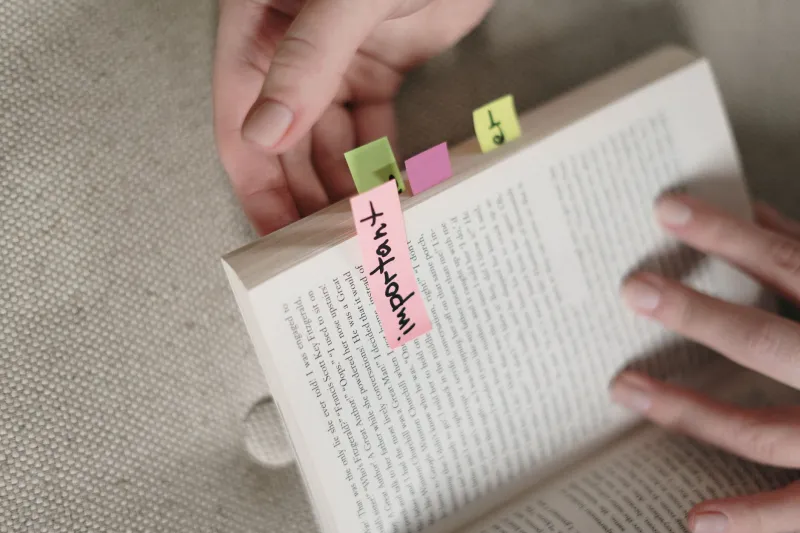
Pay attention to the novels that make you feel a little unsettled when you return to them — the ones where your old margin notes seem like they were written by a stranger. That dissonance isn't a sign that the book has failed you. It's a sign that you've lived.
And if you've been putting off a reread because you're worried it won't hold up? Maybe that's exactly the right moment to pick it back up. You might be surprised what's waiting for you on page one.
The story hasn't changed. But you have. And sometimes that's the whole point.